2026-07-31
Molding Factory Demo Sites: Showcasing Your Injection Molding Workflow Without Cloning the Demo Skin
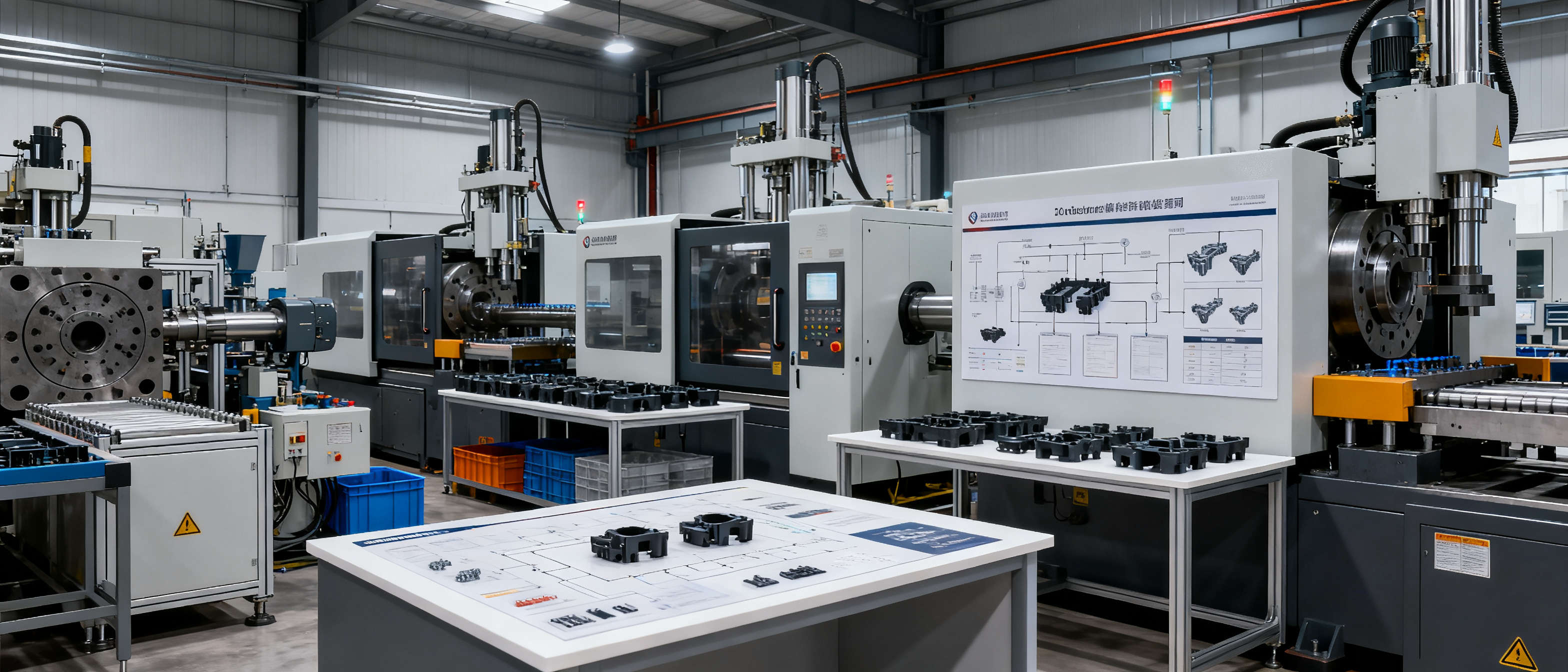
Why the Molding Demo Skin's Structure Works for Injection Molding Factories
Injection molding is a process-heavy industry. Buyers don't just want to see finished plastic parts—they want to understand how a factory manages tooling, material selection, quality checks, and production timelines. The molding demo skin on the B2B Frontage platform is built around exactly that buyer psychology. It prioritizes visual workflow storytelling over dense corporate prose, which is why overseas procurement teams tend to stay on these pages longer than they do on traditional factory websites.
The demo showcases a logical flow: facility overview, core capabilities, a product gallery organized by mold type, and a contact section that feels approachable rather than transactional. None of this is accidental. The structure mirrors how a sourcing engineer evaluates a new molding partner—first verifying legitimacy, then assessing technical range, then drilling into specific part examples. When you use the demo as a structural reference rather than a skin to clone, you're adopting a proven information architecture that aligns with how your buyers actually think.
A key advantage of this layout is its modularity. Each section stands alone enough that a buyer can scan quickly, yet the sequence creates a cumulative impression of competence. For injection molding factories, this means you can present high-precision automotive molds on the same page as high-volume consumer goods tooling without the page feeling disjointed. The demo skin's grid-based gallery and clean typography do the heavy lifting of visual organization, leaving you to focus on swapping in your own photography and specifications.
What the demo doesn't do—and shouldn't do—is serve as a direct clone. Google's helpful content system rewards originality, and buyers can spot a templated site from a mile away. The value lies in the skeleton, not the skin. Your factory's molding workflow, equipment list, and part portfolio are unique, and the demo structure simply provides a coherent container for that uniqueness. Visit the main B2B Frontage demo page to see how the same structural logic adapts across industries, from CNC machining to PCB assembly.
Mapping Your Injection Molding Workflow to the Demo's Sections (No Placeholder Text)
Before you touch a single CMS field, you need to map your actual injection molding workflow onto the demo's section layout. This isn't about filling blanks—it's about translating your factory's real production logic into the site's information hierarchy. Start by listing every distinct stage of your molding process, from mold design and tooling fabrication to injection parameters, cooling, ejection, and post-processing. Then assign each stage to the section of the demo that best communicates it to a buyer.
The demo's hero area typically introduces the factory's primary value proposition. For a molding factory, this is where you might lead with your injection tonnage range, the number of molding machines on your floor, or a standout capability like in-house mold making. Avoid generic phrases like "high quality" or "competitive price." Instead, use concrete numbers: clamping force in tons, shot size in grams, mold base standards you support, or materials you process regularly. The hero section sets the buyer's expectation for specificity, so don't dilute it with placeholder fluff.
Here's a practical mapping sequence for most injection molding factories:
- Facility & Equipment Section: Show your injection molding machines grouped by tonnage range, list auxiliary equipment (dryers, chillers, robots), and include a brief mention of your tooling workshop if you have one. Real photos of your shop floor matter more than stock images.
- Capabilities Overview: Detail your molding processes—thermoplastic injection, overmolding, insert molding, gas-assisted molding, or micro-molding. Specify material expertise: ABS, polycarbonate, nylon, PEEK, TPE, and any filled or reinforced grades you handle.
- Quality & Certifications: Map your QC workflow here. Mention inspection equipment (CMM, optical comparator, tensile tester) and certifications like ISO 9001 or IATF 16949 if applicable. Don't invent certifications—buyers verify.
- Product Gallery: This is where the mapping gets visual. Group parts by mold type, material, or industry served. Each entry should include a clear photo, part name, material, and a brief note on the mold's characteristics (cavity count, gate type, cycle time if relevant).
- Contact & Inquiry: Keep this straightforward. Provide a direct email, a WeChat or WhatsApp option if that's how your buyers communicate, and a simple form. Avoid demanding excessive information upfront—serious buyers will reach out regardless.
The mapping exercise also reveals gaps. If you don't have good photos of your mold shop, you'll know to take them before launch. If your process descriptions are muddled internally, the exercise forces clarity. The B2B Frontage rules page explicitly emphasizes that the platform is a starting point, not a turnkey solution—your input quality determines the output quality.
Customizing the Product Gallery to Reflect Your Mold Capabilities
The product gallery is the most scrutinized section of any molding factory site. Buyers scan it to gauge whether your mold capabilities align with their part geometry, volume requirements, and material preferences. A gallery filled with random plastic parts tells the buyer nothing about your specialization. A gallery organized by mold type, material family, or industry application tells a coherent story.
When customizing the gallery, group your showcased parts into logical categories that reflect how you actually sell. Common groupings that work well on the demo structure include:
- By Mold Type: Two-plate molds, three-plate molds, hot runner molds, cold runner molds, stack molds, or family molds. Each category signals a different level of tooling sophistication.
- By Material: Engineering-grade thermoplastics (PEEK, PPS, LCP), commodity resins (PP, PE, PS), or elastomers (TPE, TPU, silicone). Material-based grouping helps buyers who know exactly what their part requires.
- By Industry: Automotive interior parts, medical device housings, consumer electronics enclosures, industrial connectors, or packaging components. Industry grouping signals regulatory familiarity and supply chain experience.
- By Part Complexity: Simple single-cavity parts, multi-cavity high-volume parts, overmolded assemblies, or parts with tight tolerances (±0.02mm or better). Complexity-based grouping demonstrates your technical ceiling.
Each gallery entry should include a part photo taken against a clean, neutral background. Avoid cluttered workshop shots for the gallery—those belong in the facility section. Include a concise caption that mentions the mold's cavity count, the material used, and one notable technical feature (thin wall, tight tolerance, insert molding, etc.). This level of detail gives buyers confidence that you understand your own work, which is surprisingly rare in commodity molding websites.
What the Auto Plan ($59/yr) Lets You Edit (and When to Request a Custom Quote)
B2B Frontage offers a self‑serve Auto plan at $59/year that gives injection molding factories an English showcase site, a digital card, brochure, and short links—all on a platform subdomain. You can populate the gallery, update text and photos, and refine your contact details through the editor. For most molding factories, this covers the essentials: a clean, fast online presence that you keep up to date whenever your mold inventory or capabilities change.
Optional domain assist is available at checkout: add $5 to bind a domain you already own, or $15 to register and bind a new domain. These are one‑time fees, not annual charges.
If you need a larger CMS, a blog, custom layouts, or a factory site that goes beyond the standard showcase structure, those projects are handled by quote only. The demo at demo.getb2bsite.com/molding shows the visual quality you can expect from the Auto plan, though your own content and photography will determine the final result. The B2B Frontage blog illustrates how other manufacturers use custom‑quote sites to build an active, content‑rich web presence.
For factories that need occasional extra copy or photo edits beyond what they want to handle on their own, the Flex add‑on (+$15/yr) can be added to the Auto plan. This isn't a separate tier—it simply extends your editing support when you need a hand with updates.
Neither the Auto plan nor any custom‑quote project guarantees inquiries. No website can. What they provide is a professionally structured, mobile‑responsive online storefront that gives your molding factory a credible digital presence—something many overseas competitors still lack.
FAQ
Can I use the exact design from the molding demo for my factory site?
You can use the same structural layout—the section ordering, the gallery grid, the information hierarchy. But cloning the demo skin verbatim, including its placeholder text and stock imagery, is counterproductive. Buyers and search engines both penalize duplicate content. The demo is a scaffold. Your content is what makes the site uniquely yours. B2B Frontage encourages factories to adapt the structure to their specific workflow rather than treating the demo as a finished template.
What happens if I choose the Auto plan and later want to update my product photos?
With the Auto plan you can update product photos, descriptions, and other content yourself, anytime. The self‑serve editor is included with your $59/year subscription. If you prefer to have someone else handle the updates, the Flex add‑on (+$15/yr) provides extra editing support, or you can request a custom quote for larger batches of changes.
Does the Auto plan include a blog, and can blog content help with inquiries?
The Auto plan focuses on a self‑serve English showcase with a digital card, brochure, and short links. A blog or larger CMS is not part of the standard Auto plan; that would fall under a custom‑quote project. A regularly updated site with original content about injection molding—material selection guides, mold maintenance tips, tolerance explainers—can perform better in search results over time, but no platform can guarantee that blog posts will generate inquiries. The tool gives you the ability to publish; the results depend on your content quality and market.
Are there any hidden costs beyond the $59 annual fee?
The $59/year covers hosting, the platform subdomain, and self‑serve editing for your showcase. Optional domain assist (bind or register) is a one‑time fee at checkout. If you need extra edits beyond what you can do yourself, the Flex add‑on is $15/year. Layout changes, custom features, or a larger CMS/built‑from‑quote site are quoted separately. There are no surprise maintenance fees, no per‑product charges, and no commission on inquiries. The rules page outlines the scope in detail.
References & Further Reading
- B2B Frontage — Molding Demo Site — See the molding-specific demo skin and its section structure in action.
- B2B Frontage — Main Demo Page — Browse demo skins across other manufacturing industries for comparison.
- B2B Frontage — Platform Rules & Scope — Understand what each tier includes and what falls outside standard scope.
- B2B Frontage Blog — Read about factory site strategies, tier usage, and real-world examples from other industries.
- Google Search Central — SEO Starter Guide — Foundational guidance on site structure, content originality, and technical SEO best practices that apply to any factory website.