2026-08-07
Platform Booth vs Own-Domain Front Door: What Factory Buyers Actually Need
Platform Booth vs Own-Domain Front Door: What Factory Buyers Actually Need
When an overseas buyer evaluates a new supplier, the **platform booth vs own domain website** question is not about technology — it is about trust. A marketplace booth gives you discovery. An English factory showcase on your own domain gives you a page a buyer can forward to a procurement manager without explanation. Neither replaces the other. What most Chinese OEM factories and small-B manufacturers actually need is a lean combination: paid discovery inside a platform and a thin, credible English front door that closes the conversation.
## Marketplace booth: paid discovery and comparison shopping
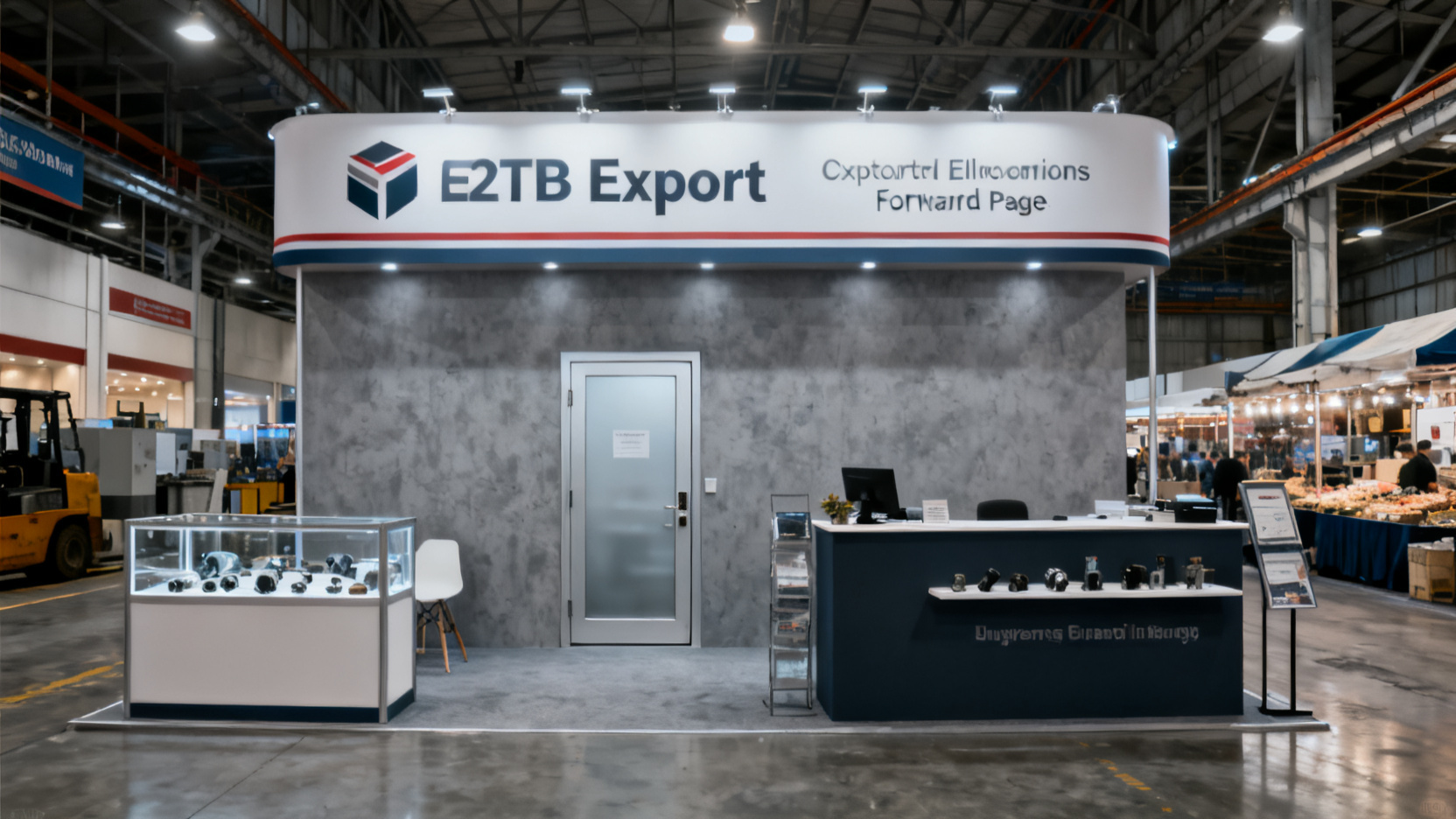
Think of a marketplace booth as a stall inside a busy trade mall. The mall brings foot traffic; you pay rent — through listing fees, commissions, or advertising — and you compete with dozens of similar suppliers arranged side by side. Buyers walk in with a shopping list, compare three or four booths in twenty minutes, and send the same inquiry to all of them.
This model works for discovery. Alibaba, Made-in-China, and Global Sources invest heavily in buyer acquisition. A factory with zero online presence can appear in a search result inside those platforms within days. The trade-off is that the platform owns the relationship. The buyer remembers the mall, not your stall number. When they forward a supplier recommendation to their boss, they copy-paste a messy URL full of tracking parameters, or they take a screenshot, or they simply say “search for this company on Alibaba.” That friction costs you opportunities.
## Own-domain front door: the page buyers can forward
Now imagine a company front door on its own street. No neighbouring stalls, no mall signage competing for attention. A buyer who has your domain — `yourfactory.com` — lands on a single, clean English page that tells them who you are, what you make, and whether you are worth a call. They can forward that link in an email, a WhatsApp message, or a procurement ticket. The recipient sees a professional, uncluttered page that loads in under two seconds and answers the four questions every buyer asks: *What do you produce? What are your capabilities? Do you have real certifications? How do I contact you?*
This is what **B2B Frontage** provides: a thin English showcase that is not a bloated WordPress site, not an Alibaba replacement, and not a multi-page corporate CMS. It is a factory frontage — a single-page digital storefront that sits on a subdomain you control (or your own domain, with optional assistance at checkout). The Auto plan costs $59 per year and includes a showcase page, a digital business card, a downloadable brochure, and short links. You can see a live structural reference at the [demo hub](https://demo.getb2bsite.com) and an industry-specific example at the [molding factory demo](https://demo.getb2bsite.com/molding).
## What breaks when there is only a booth
Relying entirely on a marketplace booth creates a fragile pipeline. The platform can change its algorithm, raise commission rates, or suspend your account over a documentation dispute. Your entire buyer-facing identity disappears overnight. Even when everything runs smoothly, the **platform booth vs own domain website** gap shows up in three practical ways.
First, buyers cannot independently verify your company. They search your factory name, find nothing except your Alibaba listing, and wonder whether you are a trading company masquerading as a manufacturer. Second, there is no branded destination for repeat visits. A buyer who met you at a trade show, received your email, or heard about you from a colleague has nowhere to go except the platform — where your competitors are one click away. Third, platform messaging systems often compress images, delay attachments, and make it harder to share detailed specifications outside the ecosystem.
## What breaks when you expect the booth to be your brand
The opposite mistake is equally common: treating a marketplace storefront as a full company website and expecting it to perform like one. A platform product page is not a brand asset. It cannot rank organically on Google the way a well-built own-domain page can, because the platform controls the technical infrastructure, the internal linking, and the crawl budget. Buyers do not bookmark Alibaba product URLs; they bookmark supplier websites.
The comparison below captures the mindset difference between a thin, honest showcase and the unrealistic expectation that a marketplace listing will attract organic Google traffic the way a content-heavy domain might.
| Thin Auto showcase (B2B Frontage) | Expecting Google traffic like Alibaba |
| --- | --- |
| A single English page built for human buyers, not crawlers | A product listing optimised for platform-internal search |
| Lives on your subdomain or custom domain; you control the URL | Lives on a platform subdirectory; URL can change without notice |
| Designed to be forwarded, printed, and shared outside any ecosystem | Designed to keep the buyer inside the platform for the next transaction |
| $59/yr, transparent boundaries; no ranking promises | Often bundled with advertising credits that expire; cost is opaque |
| Serves as a credible digital card for trade shows, email signatures, and procurement portals | Serves as a transactional catalogue page with limited brand value |
**B2B Frontage** is honest about what the Auto plan does not do. It does not guarantee search-engine rankings, inquiry volume, or customer counts. The [full rules page](https://www.getb2bsite.com/#rules) spells out those boundaries plainly. What it does give you is a forwardable, always-available English page that makes your factory look like a real company — not just another booth in the mall.
## A lean stack: platform + thin English showcase
The **platform booth vs own domain website** debate dissolves when you stop treating the two as alternatives. The most effective setup for a small-B manufacturer or an OEM export factory is a lean stack: keep your paid discovery inside one or two marketplaces, and maintain a thin English showcase on your own domain as the destination buyers land on after they find you.
This stack costs less than a single annual trade-show badge. The platform handles buyer acquisition — something no single-page site can do alone. The own-domain showcase handles credibility, forwardability, and brand continuity — something no platform product page can offer. When a buyer asks for “your website,” you send them a clean link that loads fast, looks professional on mobile, and contains your WhatsApp, email, and WeChat in one tap. When they forward it internally, the next person in the decision chain sees the same professional page, not a cluttered marketplace URL with pop-ups and competitor ads.
The technical foundation matters too. A well-structured page built with modern, lightweight frameworks — such as those recommended by [Google’s search development guidelines](https://developers.google.com/search) — loads faster and scores better on Core Web Vitals than a typical drag-and-drop builder site overloaded with plugins. A thin showcase is not a stripped-down afterthought; it is a deliberate choice to serve the buyer exactly what they need without the overhead that slows down load times and complicates maintenance.
## FAQ
### Will my B2B Frontage showcase get the same traffic as Alibaba?
No, and it is not designed to. A marketplace like Alibaba spends millions on buyer acquisition and search-engine marketing. A single-page showcase on your own domain will not replicate that traffic volume. Its purpose is to serve as the credible, forwardable destination for buyers who already found you — through a platform, a trade show, a referral, or an email. Think of it as your factory’s digital business card, not its lead-generation engine.
### Is this a replacement for my Alibaba store?
No. The Auto plan is a thin English showcase, not a multi-product ecommerce catalogue. Most factories use it alongside their marketplace presence. The platform booth attracts initial inquiries; the own-domain front door converts those inquiries into serious conversations by giving procurement managers a professional page they can trust and forward.
### What exactly is included in the $59 per year plan?
The Auto plan includes a single-page English showcase, a digital business card, a downloadable company brochure, and short links for easy sharing. A subdomain is included at no extra cost. If you prefer to use your own custom domain, domain assistance is available as an optional add-on at checkout. The plan does not include content writing, custom design beyond the showcase template, or guaranteed rankings. For larger CMS or custom requirements, quotes are available separately.
## References & Further Reading
- [B2B Frontage Demo Hub](https://demo.getb2bsite.com) — live structural reference for the thin showcase format
- [Molding Factory Demo](https://demo.getb2bsite.com/molding) — industry-specific example of an English factory frontage
- [B2B Frontage Rules & Honest Boundaries](https://www.getb2bsite.com/#rules) — what the product does and does not promise
- [B2B Frontage Blog](https://www.getb2bsite.com/blog) — additional articles on factory marketing and lean web presence
- [Google Search Central — SEO Fundamentals](https://developers.google.com/search/docs/fundamentals/seo-starter-guide) — technical best practices for building pages that perform well in search